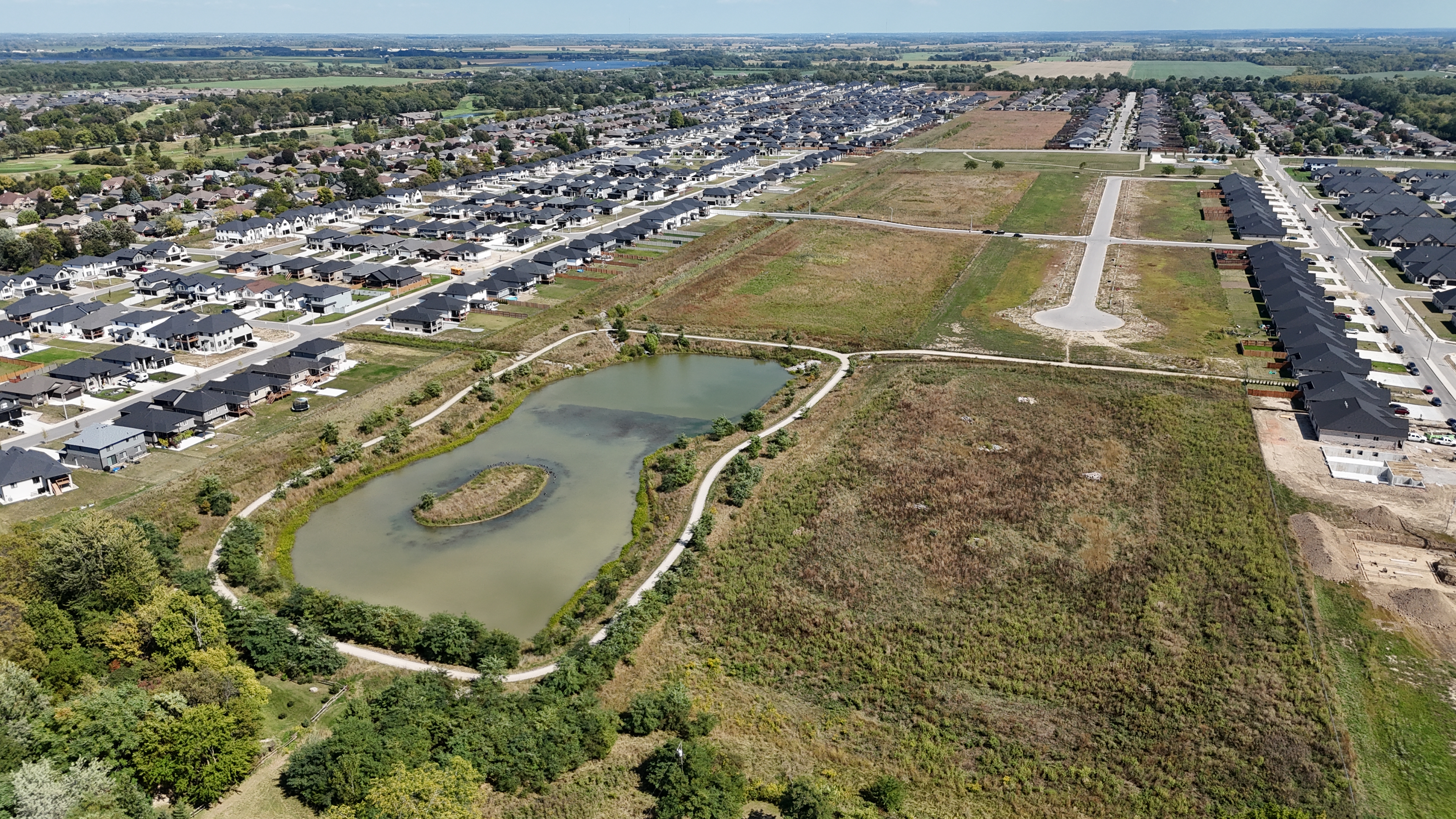
Kingsbridge Naturalized Area
The Town acquired 27 hectares of naturalized areas in 2023 as part of a subdivision development agreement. This naturalized area is protected lands with species at risk that remain untouched. These areas have been specially developed with species at risk in mind and are home to a variety of endangered and rare species. The lands are under order through the Ministry of Environment Conservation and Parks (MECP) and no mow zones that are protected. The public is not permitted to enter these lands.
This large natural area has been created in the Kingsbridge community to provide habitat and a safe corridor for wildlife to travel through between local natural areas. Individuals in this community can help ensure the natural areas surround their homes thrive in this setting.
Neighbourhood
Natural habitats, including a wildlife corridor have been incorporated within and adjacent to homes. In the east, existing natural wooded communities are being enhanced by creating open meadows beside them. These meadows continue through the community to create a wildlife corridor to the stormwater ponds in the west. A mixture of native grasses and flowers have been planted, and these will provide habitat for song birds, butterflies and white-tailed deer. These natural habitats can provide valuable benefits to people. Open grassland habitats stabilize and improve soils, provide food for pollinators and provide a peaceful backdrop to rear yards.
Facts
The impact of one individual on a large, remote natural space is usually not a concern. However, in an urban setting, the pressure of many individuals is high and it is these cumulative impacts that lead to ecosystem failure. Many different types of impacts can affect the natural areas around you. Trails, yard waste, over-reaching landscaping and accidental transport of seeds if invasive species are just some of the ways the natural environment may suffer in an urban setting.
Trails
Random walking and bike trails can degrade natural habitats by trampling vegetations, compacting soil and introducing non-native invasive species. Trampling reduces the capacity for pants to naturally regenerate, and disturbs inhabiting wildlife.
Yard Waste
Dead stems from previous years growth generate sufficient nutrient cycling for a healthy habitat without our added plants and grass clippings. Dumping yard and garden waste can be "too much of a good thing" placing stress on the meadow. Cumulative dumped material:
- Smothers the natural ground vegetation
- May affect oxygen exchange to the roots of trees
- Restricts new seedling establishment
- Introduces invasive and non-native plants to the system; without control, these can take over the area.
What can you do?
Compost yard waste materials for re-use in landscaped portions of your property, or provide this waste for others to compost: curbside collection or take to the depot. It is a much better approach and will help to keep the natural habitats beyond your property in good condition.
Landscaping
Plants in the natural areas have ben selected to provide habitat and aesthetic benefits. Resist the temptation to relocate plants to your yard, as some have very deep root systems and don't transplant well. Additionally, take care to select landscape plants that are non-invasive so they do not spread to the natural areas.
What can you do?
Select appropriate native or non-invasive species from a local garden centre or seed supply company. If the natural area requires care, contact the municipality.
Property Limits
Fences have been installed along the boundary of your property and the meadow areas. This is to prevent encroachment which will destroy habitat, disturb wildlife, and generally negatively impact the meadow.
What can you do?
Respect the rear-yard boundary marked at each corner of your backyard. Keep all gardens, structures and lawns inside the active use area of your yard.
Wildlife
It is illegal to keep wild animals, including injured ones, in captivity without a permit. It is best to leave injured animals alone or seek qualified experts to help. If you have a swimming pool, it is best to release pool outflows to your lawn to abate impacts to nearby wildlife habitat.
What can you do?
Some additional information is available on the Wildlife and Nature page of the Ontario government website.
https://www.ontario.ca/page/wildlife-and-nature
Pets
Domestic cates and dogs are hunters. When a neighbourhood pet runs off-leash, they can disturb ground nesting birds and small mammals, compromising their success. Cats are particularly notorious for their impact on wildlife.
What can you do?
Keep your pets on a leash and under control at all times.
Local Snakes Species

Snakes are a component of a healthy ecosystem and provide various benefits, including control if pests (mice) as well as moving nutrients within the landscape. The Eastern Foxsnake and Butler's Gartersnake are non-venomous, native snake species that are part of our natural heritage and unique to the Great Lakes region Both species are harmless, generally docile and tend to avoid or ignore people They have adapted to use some parts of the modern landscape but do best in natural, open habitats like those being created here. Eastern Foxsnake eat nuisance rodents like rats and mice. Butler's Gartersnake have very small home ranges where they feed almost exclusively on earthworms. They are very similar in appearance to Easter Gartersnake.

Why are these snakes Endangered?
Eastern Foxsnake and Butler's Gartersnake are Endangered mainly due to the loss of the natural prairie, savanna and shallow marsh habitats that they used to call home. They are also negatively affected by high populations of predators associated with people (racoons, skunks and free-ranging pets) and are often injured or killed on roadways. People may also harm them, due to misunderstanding or fright, even though they are harmless.
The Endangered Species Act
Eastern Foxsnakes and Butler's Gartersnakes are protected under the Ontario Endangered Species Act (ESA, 2007). Under this Act, harming or harassing a protected species, or impacting its habitat without authorization, is against the law. Individuals failing to comply can be fined by the Ministry of Environment and Natural Resources.
Where can I go to learn more?
The following website can help with some of the questions you might have:
https://www.ontario.ca/page/species-risk-ontario
https://ontarionature.org/programs/community-science/reptile-amphibian-atlas/